
What Does Liability Car Insurance Cover?
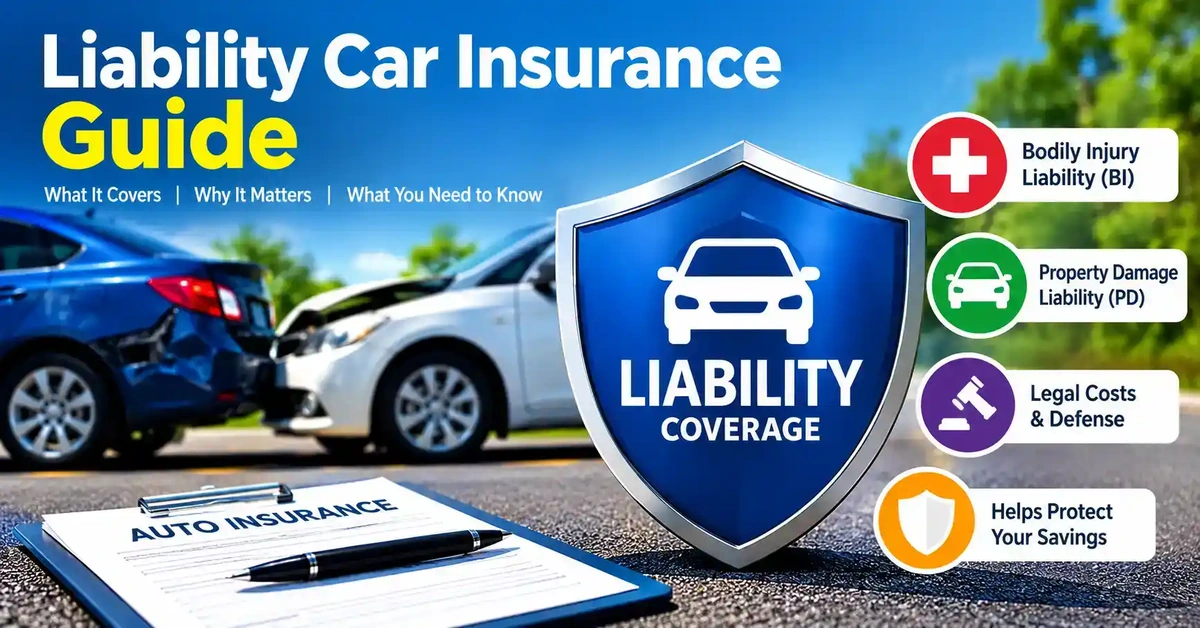
Liability car insurance helps pay for other people’s injuries and property damage when you cause a car accident and are legally responsible. It typically includes bodily injury liability (BI) and property damage liability (PD), which can cover eligible medical expenses, lost wages, vehicle repairs, and certain legal costs, subject to your policy terms and limits.
However, liability car insurance generally does not cover your own vehicle repairs or medical bills. You may need additional protection, such as collision, comprehensive, medical payments (MedPay), or personal injury protection (PIP), depending on your needs and state requirements.
Key Takeaways
- Most U.S. states require drivers to carry a minimum amount of auto liability insurance, but the exact requirements vary by state.
- Liability car insurance has two main components: Bodily Injury Liability (BI) and Property Damage Liability (PD).
- It generally pays for eligible claims made by other people when you are legally responsible for an accident.
- Liability coverage usually does not have a deductible.
- Your insurance company only pays covered claims up to the applicable policy limits.
- Collision, comprehensive, MedPay, and PIP can provide protection for expenses that liability insurance does not cover.
Liability car insurance is an important part of protecting yourself financially when driving. If you cause an accident, you may be responsible for the injuries or property damage suffered by others. Without enough coverage, you could have to pay some of those expenses yourself.
To understand how this protection works, it helps to look at its two main parts: bodily injury liability and property damage liability.
1. Bodily Injury Liability (BI)
Bodily injury liability insurance is one of the two main types of liability car insurance coverage. It helps protect you financially when another person makes an eligible injury claim after an accident for which you are legally responsible.
Depending on the circumstances and your policy, this coverage may pay for the following expenses.
- Medical expenses: This can include emergency treatment, hospital bills, surgery, rehabilitation, and other eligible medical care related to the accident.
- Lost income: If an injured person cannot work because of their injuries, liability coverage may help compensate them for eligible lost wages.
- Pain and suffering: A covered injury claim may include compensation for physical pain and certain emotional effects associated with the accident, depending on applicable law.
- Funeral expenses: When a covered accident results in a person’s death, eligible claims may include funeral and related expenses.
- Legal defense costs: If someone files a lawsuit over an accident you caused, your insurer may provide a legal defense and pay covered legal expenses according to the policy terms. Applicable limits and conditions still apply.
For instance, suppose you cause a collision at an intersection and the other driver gets hurt. If you are found legally responsible, your bodily injury liability insurance may help cover the injured person’s medical bills and other eligible expenses, subject to your policy limits and conditions.
Remember that bodily injury liability generally protects you against claims made by other people. It is not designed to pay for your own injuries.
2. Property Damage Liability (PD)
Property damage liability insurance is the second major part of car insurance liability coverage. It can help pay for covered damage to another person’s vehicle or property, up to the applicable policy limit.
It can cover more than just damage to another vehicle.
- Vehicle repairs: If you damage another driver’s car, this coverage may pay for eligible repair costs.
- Vehicle replacement: If the other person’s vehicle is declared a total loss, the claim may be settled according to the vehicle’s covered value and the applicable policy terms.
- Damage to other property: Property damage liability can also apply when you damage items such as a fence, mailbox, garage, building, or streetlight with your vehicle.
For example, suppose you lose control of your car and hit a neighbor’s fence. If you are legally responsible, your property damage liability coverage may help pay for the eligible repair costs, up to your policy limit.
This coverage protects you against covered claims for damage to other people’s property. It generally does not pay to repair your own vehicle.
What Does Liability Car Insurance NOT Cover?
One important thing to understand is that car insurance is primarily designed to protect you when other people make covered claims against you. It generally does not pay for your own vehicle damage or injuries.
Here are some common expenses that may require separate coverage.
- Damage to your own car: If you hit a pole, collide with another vehicle, or cause damage to your car in another covered accident, collision coverage may help pay for repairs, subject to your deductible and policy terms.
- Your own medical expenses: MedPay or personal injury protection (PIP) may help cover certain medical costs after an accident. The coverage available and its requirements depend on your policy and state law.
- Theft, vandalism, and weather damage: Comprehensive coverage may help pay for covered losses involving theft, vandalism, falling objects, fire, or certain weather-related events.
- Damage caused by an uninsured or underinsured driver: If another driver causes an accident but has no insurance or insufficient coverage, uninsured or underinsured motorist coverage may help with eligible losses where available. Collision coverage may also help repair your vehicle after a covered crash.
The exact protection depends on the coverage you purchase, your policy exclusions, your deductibles, and the rules in your state.
Liability Coverage vs. Full Coverage
The term “full coverage” is commonly used to describe an auto policy that includes liability insurance, collision coverage, and comprehensive coverage. However, it is not a standardized insurance policy, and it does not mean every possible loss is covered.
| Feature | Liability Only | Liability + Collision + Comprehensive |
|---|---|---|
| Pays eligible claims for another person’s injuries | Yes | Yes |
| Pays for covered damage to another person’s property | Yes | Yes |
| Helps pay to repair your car after a covered collision | No | Yes, subject to your deductible |
| Helps cover theft or certain weather-related damage to your car | No | Yes, subject to your deductible |
| Usually has a deductible for liability claims | No | No for liability; collision and comprehensive usually have deductibles |
Adding collision and comprehensive coverage can provide broader protection for your own vehicle. However, whether you need them depends on your car, finances, lender requirements, and personal circumstances.
How to Read Your Liability Car Insurance Limits
When you review your car insurance documents, you may see three numbers separated by slashes. This is known as a split-limit policy.
Liability car insurance limits determine the maximum amount your insurer will pay for covered claims. Understanding your bodily injury and property damage limits is important because you may have to pay expenses that exceed your available coverage.
For example, a policy might show 50/100/50, with each number representing thousands of dollars.
Here is what those limits generally mean:
- $50,000 per person for bodily injury: The maximum payable for covered bodily injury claims involving one person in an accident.
- $100,000 per accident for bodily injury: The maximum payable for all covered bodily injury claims combined in one accident.
- $50,000 for property damage: The maximum payable for covered property damage claims from one accident.
These limits are subject to the policy terms, applicable exclusions, and how the claim is handled.
What Happens If the Damage Exceeds Your Policy Limits?
- Suppose you cause an accident that totals another person’s vehicle, and the covered property damage is valued at $80,000. Your property damage liability limit is $50,000.
- If the full $80,000 is legally owed and covered, your insurer would generally pay no more than the applicable $50,000 limit. You could be personally responsible for the remaining $30,000.
- The other party may pursue the unpaid amount through legal action, depending on the circumstances and applicable law.
- A similar problem can arise when several people suffer serious injuries in one accident. If their combined eligible claims exceed your bodily injury limits, you may be responsible for amounts that insurance does not cover.
- That is why choosing liability limits deserves careful consideration. State minimums may satisfy legal requirements, but they might not be sufficient for a serious accident.
- Some drivers choose higher limits, such as 100/300/100, depending on their budget and financial situation. This means $100,000 per injured person, $300,000 per accident for bodily injury, and $100,000 for property damage. It is an example of a coverage level, not a guarantee that it is right for every driver.
How Much Liability Car Insurance Do You Need?
The right amount of liability insurance depends on your state’s requirements, your financial circumstances, how you use your vehicle, and the potential costs of an accident.
Consider these factors when comparing policies:
1. Your state’s minimum requirements
Check the current rules in your state before purchasing coverage. Legal minimums differ, and requirements can change over time.
2. Potential accident costs
Medical care, lost income, and vehicle replacement can be expensive. Higher limits may help protect you against covered claims that would otherwise exceed a basic policy.
3. Your financial situation
Consider the financial consequences of having to pay accident-related costs that exceed your insurance limits. Choose coverage that balances the protection you need with premiums you can afford.
4. Additional liability protection
Some drivers may benefit from a personal umbrella policy, which can provide extra liability protection above certain underlying insurance policies. Eligibility requirements and coverage terms vary.
Compare quotes at different coverage levels, review the exclusions, and consider speaking with a licensed insurance professional if you are unsure which limits are appropriate.
Reliable Sources for Car Insurance Rules and Coverage
Understanding liability car insurance involves more than knowing what a policy covers. Drivers should also check the legal requirements in their state and review reliable sources before choosing their coverage.
General Insurance Information vs. State-Specific Requirements
In general, auto liability insurance helps pay for eligible injuries and property damage suffered by other people when you are legally responsible for an accident. Bodily injury (BI) and property damage (PD) liability are the two main components of this coverage.
However, insurance laws and minimum coverage requirements vary by state. Some states require additional coverages, while others allow certain alternatives to traditional auto insurance. The coverage required by law is a minimum standard, not necessarily the amount of protection a driver needs.
For general information about liability coverage and auto insurance terminology, consult these reliable resources:
- National Association of Insurance Commissioners (NAIC): Auto Insurance — Explains common auto insurance coverages and how state requirements differ.
- Insurance Information Institute (Triple-I): Background on Compulsory Auto Insurance — Provides background on mandatory auto insurance laws and state liability requirements.
- NAIC: State Insurance Departments Directory — Helps you locate your state’s insurance regulator for official consumer guidance.
How to Verify Your State’s Minimum Liability Requirements
Before buying or renewing a policy, visit your state’s insurance department website to check the current minimum liability limits, required coverages, and any applicable exceptions. You should also confirm the rules through official state government sources when necessary.
Remember that meeting your state’s minimum insurance requirement does not guarantee that you will have enough coverage after a serious accident. If covered claims exceed your policy limits, you may be responsible for the unpaid amount.
Use general insurance guides to understand how coverage works, but rely on current official state sources for legal requirements. Always review your policy documents to confirm the protection, exclusions, and limits that apply to your situation
Liability-Only Car Insurance Companies Compared
The best insurer for your situation depends on your location, driving record, coverage needs, eligibility, and budget. The companies below are options worth comparing, rather than a universal ranking of the cheapest providers.
| Insurance company | May suit drivers looking for | Features to compare |
|---|---|---|
| GEICO | Online policy management and discounts | Available discounts, liability limits, and quote options |
| USAA | Active-duty personnel, veterans, and their relatives | Membership qualifications, premium rates, and policy options |
| Erie Insurance | Drivers seeking agent support in its service areas | Local availability, policy features, and claims service |
| State Farm | Drivers who prefer working with local agents | Agent support, discounts, and coverage options |
| Progressive | Drivers comparing different coverage options | Quote tools, discounts, and available policy features |
How to Compare Liability Car Insurance Quotes
Do not select an insurer based on price alone. When comparing quotes, try to use the same liability limits and the same policy details for each company.
Check the following before making a decision:
- Premium: Compare the total cost for equivalent coverage.
- Coverage limits: Confirm the bodily injury and property damage limits offered.
- Premium discounts: Make sure to request information on any cost-saving programs you might be entitled to.
- Claims service: Review how the company handles claims and customer support.
- Availability: Confirm that the insurer offers the coverage in your state.
- Eligibility: Some insurers, including USAA, serve specific eligible groups.
Insurance premiums can vary considerably between drivers and locations. For that reason, avoid treating a published average as the price you personally will pay.
How to File a Liability Car Insurance Claim
After a car accident, knowing how to handle the insurance process can help you avoid unnecessary delays. If you believe you are responsible for an accident, contact your insurance company as soon as reasonably possible and follow its instructions.
Here are the main steps involved:
1. Report the accident: Notify your insurer and provide basic information about what happened, including the date, location, and vehicles involved.
2. Exchange information: When appropriate and safe, exchange contact and insurance details with the other driver. Collect witness information if available.
3. Document the incident: Keep photographs of vehicle damage, the accident scene, and any relevant documents. If a police report is available, your insurer may ask for a copy.
4. Cooperate with the investigation: Your insurer may review the evidence, speak with the drivers or witnesses, and determine how the policy applies to the claim.
5. Follow up with your insurer: Respond to requests for additional information and ask about the next steps if you are unsure how the claim is progressing.
The process varies by insurer, state, and accident circumstances. Avoid admitting legal fault or agreeing to pay a settlement on the spot. Instead, provide accurate information and follow your insurer’s guidance.
What Is the Difference Between Split Limits and a Combined Single Limit?
Many auto insurance policies use split limits, such as 50/100/50, which set separate maximum amounts for bodily injury per person, bodily injury per accident, and property damage.
Other policies may use a combined single limit (CSL). Instead of separate limits for bodily injury and property damage, a CSL policy provides one overall limit for covered liability claims from an accident.
For example, a policy with a $300,000 combined single limit may provide up to $300,000 for eligible covered liability claims arising from one accident, subject to its terms.
Not every insurer offers both structures, and policy conditions can differ. Review your policy documents carefully so you understand how your liability limit works.
Frequently Asked Questions
Does liability car insurance have a deductible?
Liability car insurance usually does not have a deductible. A deductible is the amount you pay toward a covered loss before your insurer pays the remaining eligible amount. Collision and comprehensive coverage commonly have deductibles, but liability claims generally do not.
Your insurer’s payment still depends on coverage eligibility, liability, policy conditions, and the applicable limits.
Is liability car insurance the same as full coverage?
No. Liability insurance generally pays covered claims for injuries or property damage you cause to others. The term “full coverage” commonly refers to liability coverage combined with collision and comprehensive insurance.
Even a policy described as full coverage may have exclusions and limits, so check the actual coverages listed in your policy.
Does liability car insurance cover my car if another driver hits me?
Your own liability coverage generally does not pay to repair your vehicle when another driver hits it. If the other driver is legally responsible, their property damage liability coverage may pay for your eligible vehicle damage.
If the other driver has no insurance or not enough insurance, your uninsured or underinsured motorist coverage may help where applicable. Your collision coverage may also pay for covered vehicle damage, subject to your deductible.
Does liability car insurance cover passengers?
Bodily injury liability generally covers eligible injury claims made by people in another vehicle when you are legally responsible for an accident.
Coverage for passengers riding in your own car depends on state law, the policy’s definition of an insured person, and any applicable exclusions. MedPay or PIP may also help cover certain medical expenses for you or your passengers, depending on your coverage.
What is the difference between bodily injury and property damage liability?
Bodily injury liability helps cover eligible claims related to injuries suffered by other people in an accident you cause. Property damage liability helps cover eligible damage to another person’s vehicle or other property.
Both are important parts of understanding how liability car insurance works.
What happens if I cause an accident without enough liability car insurance?
If covered claims exceed your policy limits, you may be personally responsible for the unpaid amount. The injured parties may pursue recovery through legal action, depending on the circumstances and state law.
Choosing suitable liability limits can help reduce the risk of facing large out-of-pocket costs after a serious accident.
Does liability car insurance cover an accident if I am only partly at fault?
That depends on the state’s fault rules and the circumstances of the accident. Some states allow an injured person to recover damages even when they share some responsibility, while others apply different restrictions.
Your insurer will assess the claim under the policy and applicable law. The final amount payable may depend on the determination of fault and the rules governing the claim.
Final Thoughts
- Liability car insurance is an essential part of financial protection for drivers. It can help cover eligible bodily injury and property damage claims when you cause an accident and are legally responsible. Before buying a policy, compare coverage limits, review exclusions, and consider whether additional protection is appropriate for your vehicle and financial situation.
- However, liability car insurance generally does not pay for your own medical expenses or repairs to your vehicle. Understanding your policy limits, exclusions, and optional coverages can help you make a more informed decision.
- Before choosing a policy, check your state’s requirements, compare coverage options, and consider whether your limits provide enough protection for your circumstances. The cheapest policy may meet the legal minimum, but it may not provide enough coverage for every serious accident.
Keep learning :
General Liability Insurance: Essential Coverage, Costs & Guide (2026)